
Célestin Freinet brought a printing press into the classroom, and his pupils started writing for real readers. Here is an app for a family newspaper: the child dictates their news, decides what to change, and grandma replies in "Letters to the Editor". With a ready prompt and an honest note on why there's no voice recognition.
Welcome to iovigi's Blog
Reflections from the event horizon of my mind.
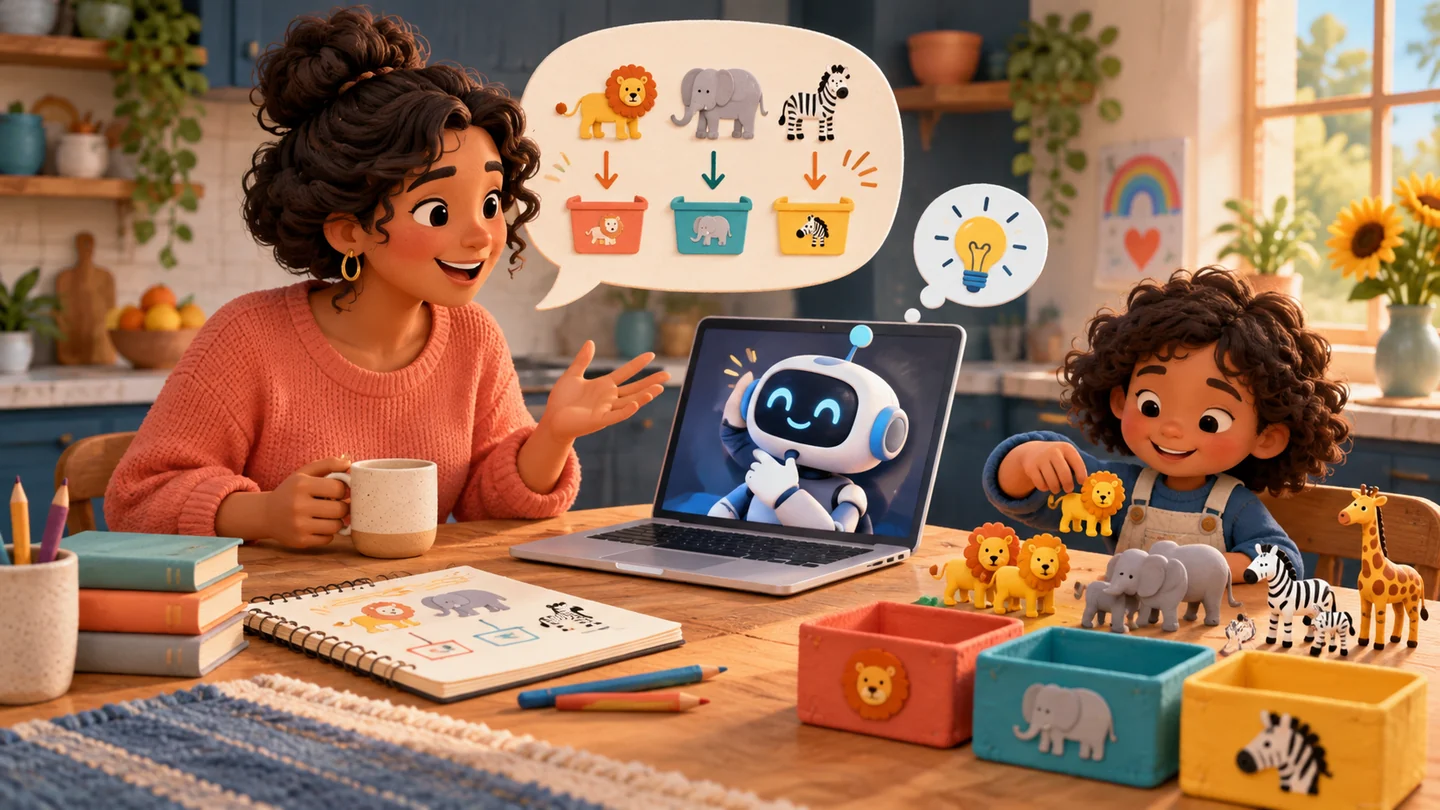
Shinichi Suzuki noticed that every child learns their mother tongue without anyone showing them letters. Why not learn music the same way? Here is a rhythm echo game for parent and child: listen, repeat, then lead. With a ready prompt and an honest answer about whether music makes children smarter.
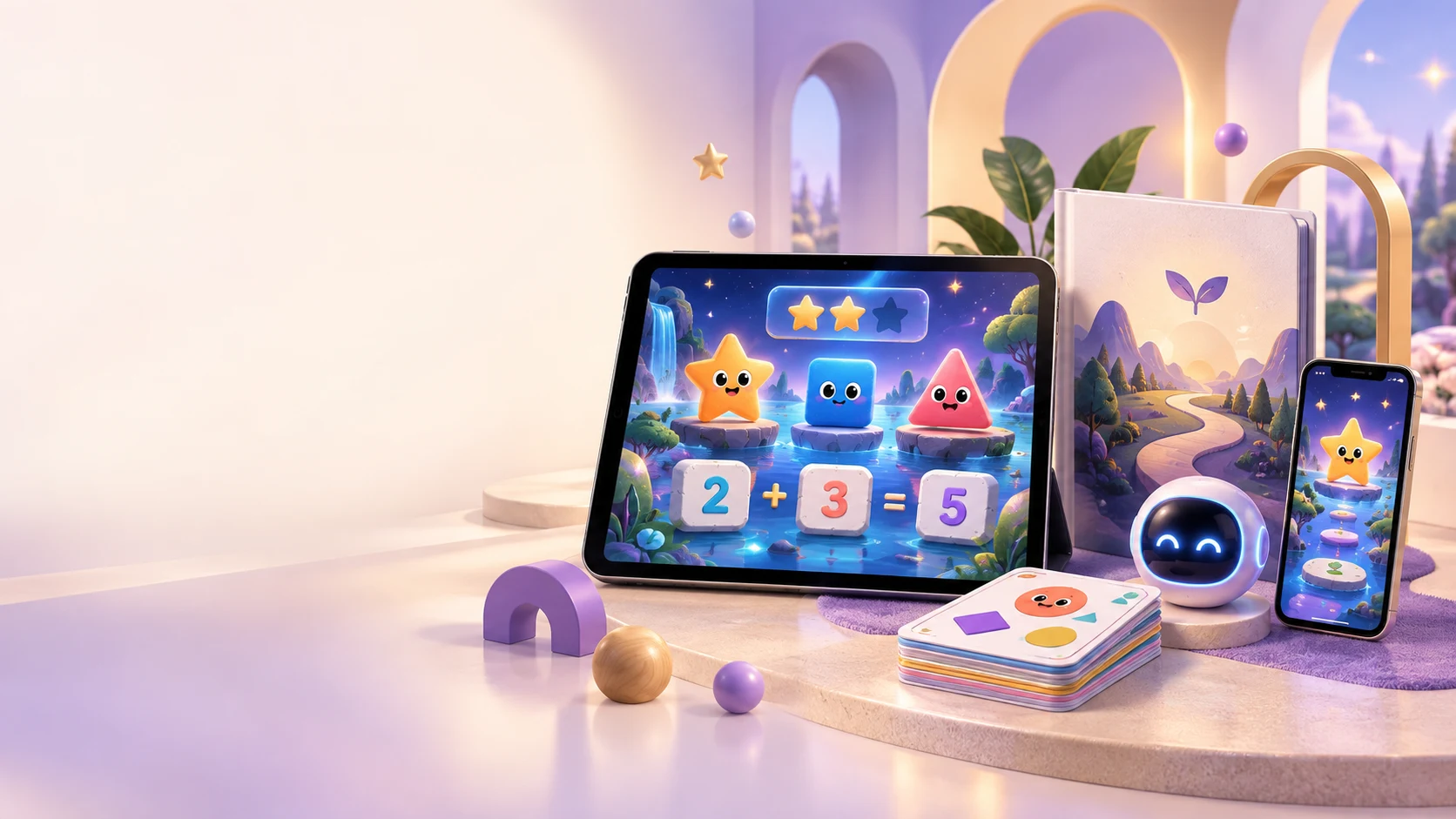
Albert Bandura showed that children learn by watching others. Here is a game that swaps the roles: your child's favourite character makes mistakes, and your child corrects it and explains why. With a ready prompt, the rubber duck from programming, and one uncomfortable truth about the most important model in a child's life.
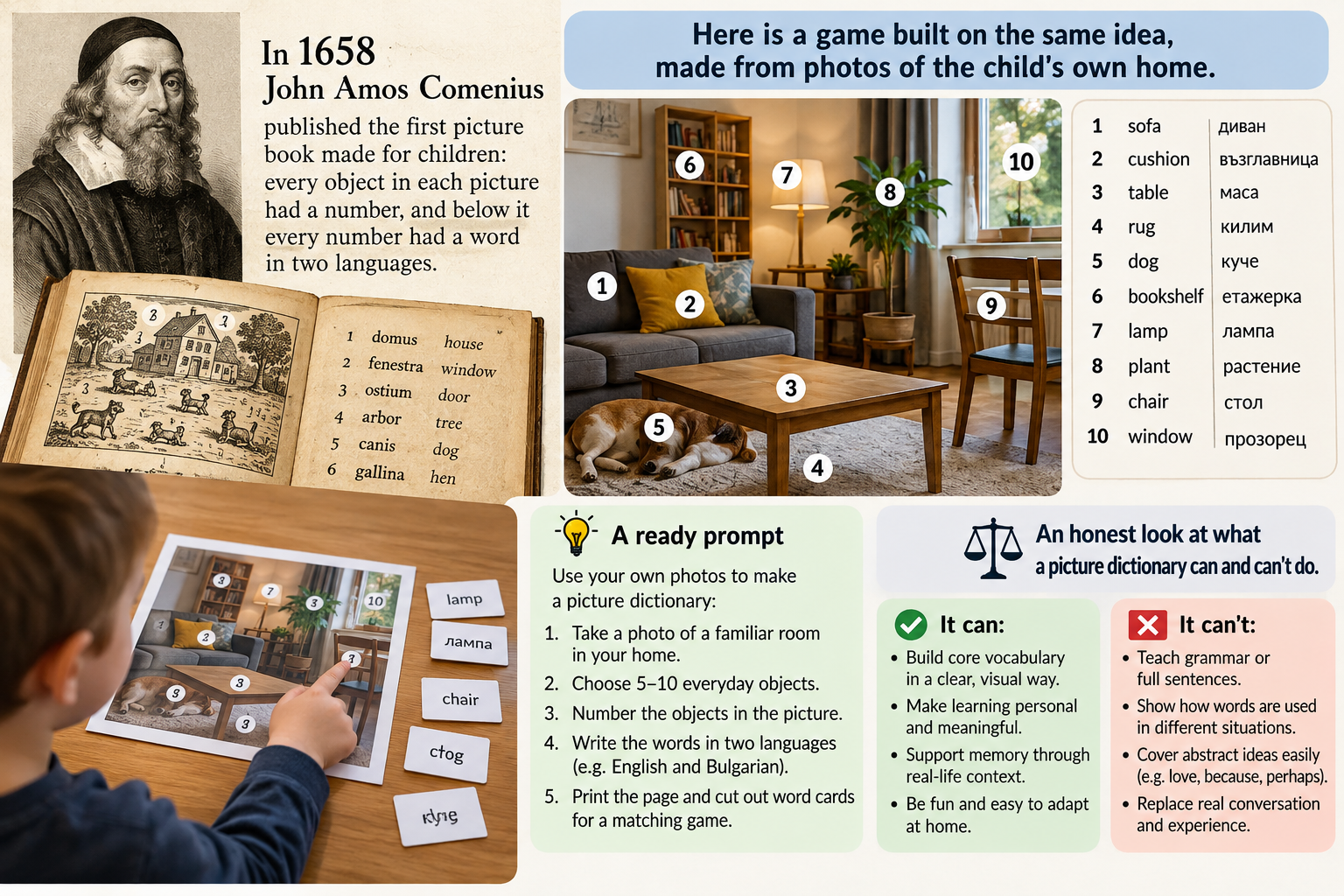
In 1658 John Amos Comenius published the first picture book made for children: every object in each picture had a number, and below it every number had a word in two languages. Here is a game built on the same idea, made from photos of the child's own home. With a ready prompt and an honest look at what a picture dictionary can and can't do.
So far in this series the games never told a child "right" or "wrong". B. F. Skinner, the grandfather of every learning app, would object. Here is what the research says about feedback, and a letter game that gives it without handing out points or praise.
Loading more posts...